
Technology has fundamentally changed the way competition is experienced, both in traditional sports and in the rapidly expanding world of eSports. While athletes have long relied on advanced footwear, performance tracking systems, and specialized training equipment, competitive gamers now depend on a growing ecosystem of high-performance gaming gear to gain an edge. From mechanical keyboards and precision-engineered gaming mice to ultra-fast monitors and low-latency communication devices, gaming gear and equipment has become an essential part of modern digital competition.
The Rise of Performance-Driven Gaming Technology
Competitive gaming has evolved far beyond casual entertainment. Professional eSports tournaments now feature elite players competing for substantial prize pools, sponsorship deals, and international recognition. In such highly competitive environments, even the smallest technical advantage can significantly impact performance.
Gaming gear is specifically engineered to reduce delays and improve responsiveness. Mechanical keyboards, for example, provide faster actuation compared to standard keyboards, allowing players to execute commands more quickly. High-precision gaming mice offer customizable sensitivity settings, helping players react with greater accuracy in fast-paced environments.
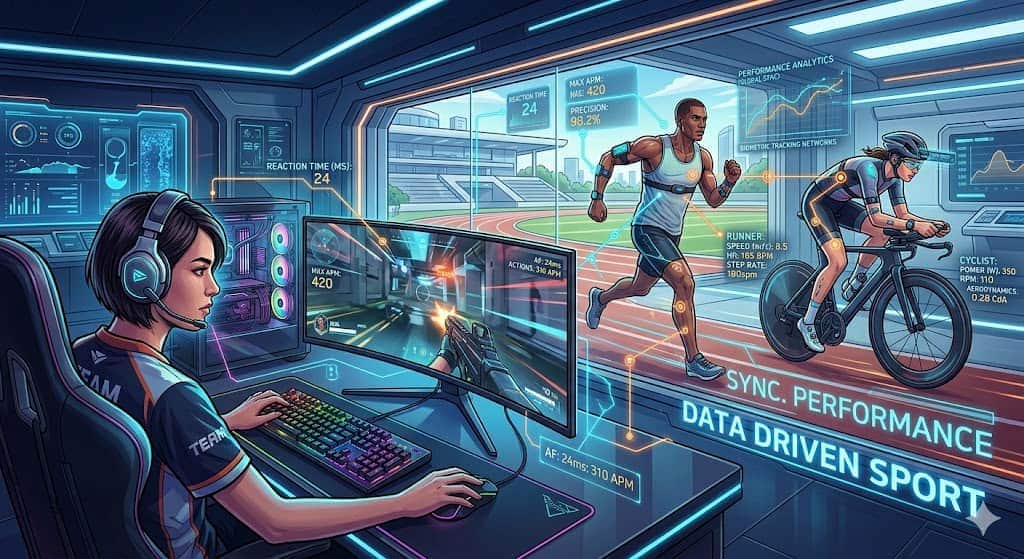
This mirrors developments in traditional sports, where athletes increasingly rely on technology-enhanced equipment designed to maximize efficiency and precision. Whether on a football field or inside a competitive gaming arena, performance often depends on how effectively technology supports human skill.
Precision Equipment and Competitive Advantage
In both sports and eSports, precision often separates elite competitors from average performers. For professional gamers, hardware directly influences reaction time, decision-making speed, and execution consistency.
Several core devices define competitive gaming performance:
- Mechanical keyboards with faster tactile response
- Gaming mice featuring adjustable DPI sensitivity and precision sensors
- High-refresh-rate monitors delivering smoother visual feedback
- Low-latency headsets enabling instant team communication
- Ergonomic controllers and accessories reducing physical strain during long sessions
For example, a monitor running at 240Hz refresh rate provides significantly smoother motion tracking than a standard display.
In competitive first-person shooters, this visual clarity can improve reaction time by milliseconds, a small difference that often determines victory or defeat.
Traditional athletes rely on equipment optimized for performance, and eSports professionals now operate under the same principle.
How Gaming Gear Improves Physical Performance in eSports?
Although eSports is digital, physical performance still plays a major role in success. Professional players often compete for hours under intense concentration, requiring endurance, coordination, and consistent motor control.
Gaming peripherals are increasingly designed with ergonomic science in mind. Long gaming sessions can lead to wrist strain, muscle fatigue, and repetitive stress injuries if equipment is poorly designed. Modern gaming gear addresses these concerns through improved ergonomics and customizable setups. In fact, there are plenty of benefits that can be enjoyed to investing in modern gaming gear such as:
- Reduced wrist and finger fatigue
- Improved posture through adjustable seating and desk accessories
- Better hand positioning for faster response times
- Lower long-term injury risk during extended gameplay
This reflects trends seen in traditional sports medicine, where equipment is designed not only for immediate performance but also for long-term physical sustainability. Competitive gaming is increasingly treated with the same level of biomechanical consideration.
The Overlap between Traditional Sports Technology and eSports
The distinction between sports and eSports continues to narrow as both industries adopt similar technological strategies. Professional athletes use wearable devices, motion-tracking systems, and biometric analytics to improve performance. In eSports, gaming technology serves an equivalent function by optimizing player interaction with digital environments. This is the same reason why many advanced gaming setups are now integrating:
- Performance monitoring software
- Real-time latency tracking
- Custom hardware profiles for different game genres
- AI-assisted optimization systems for resource management
Interestingly, sports organizations are beginning to study eSports technology for training applications. Virtual simulations and reaction-based gaming tools are increasingly used to improve cognitive speed and hand-eye coordination among athletes.
This crossover demonstrates how gaming technology is influencing broader performance science across multiple competitive disciplines.
The Future of Competitive Performance Technology
As technology advances, gaming gear will continue becoming more sophisticated. Artificial intelligence, adaptive hardware, and biometric feedback systems are expected to redefine how players interact with competitive environments. It is expected that future innovations may include:
- AI-driven peripherals that adjust sensitivity automatically
- Eye-tracking systems for faster targeting control
- Adaptive controllers based on player behavior patterns
- Wireless technologies with virtually zero latency
- Haptic feedback systems for deeper sensory immersion
These advancements suggest that future competition will increasingly depend on how well technology amplifies human performance.
In both traditional sports and professional gaming, success is becoming a partnership between talent and equipment.
Growth and Consistent Usage of Modern Gaming Gear to Sports Scene
Gaming gear has become one of the most important technological drivers behind modern competitive performance. In eSports, specialized equipment directly influences speed, precision, communication, and physical endurance, making hardware just as important as player skill.
As traditional sports and digital competition continue to overlap, gaming technology is emerging as a broader performance innovation sector. From mechanical keyboards to ultra-responsive displays, today’s gaming gear reflects a larger trend where precision engineering shapes the future of competition.